
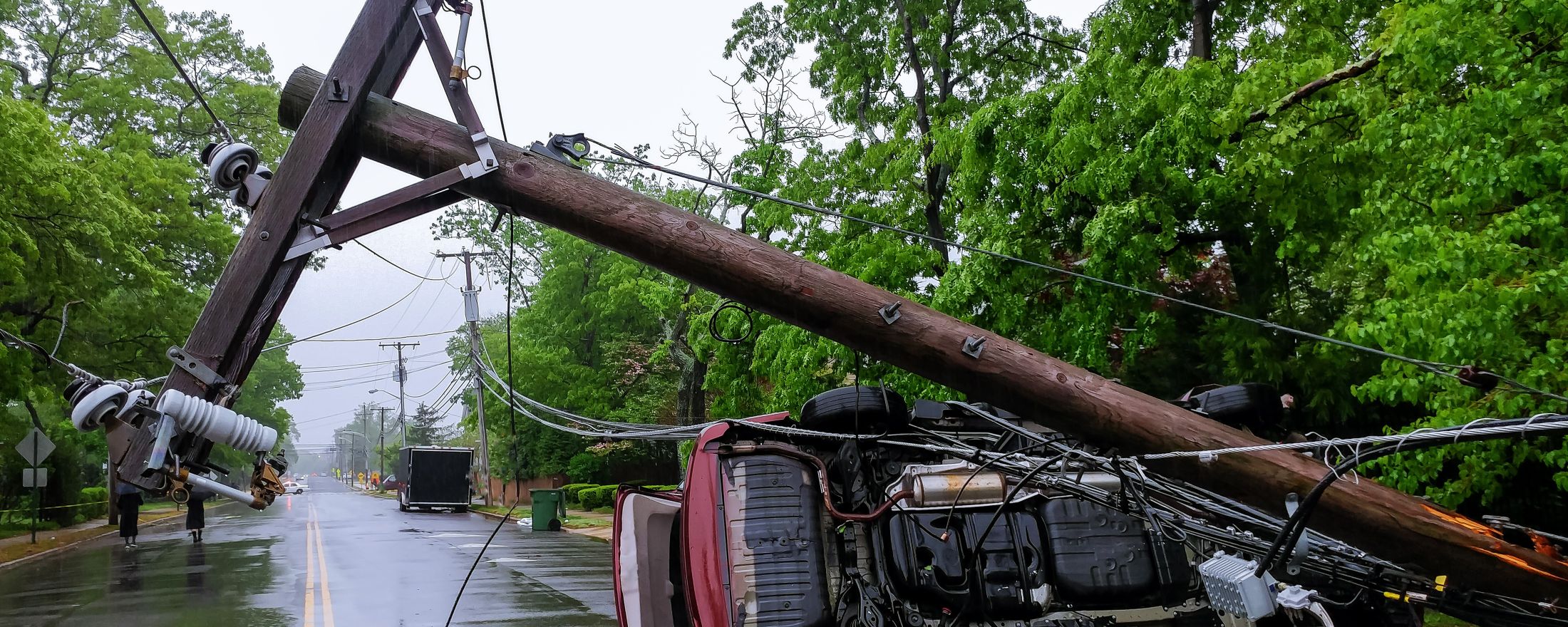


Utility companies across North America are facing increased challenges in maintaining critical infrastructure and restoring service quickly. Hurricanes, wildfires, ice storms, and flooding are no longer rare occurrences but annual threats that demand rapid and effective responses. The strain on in-house utility crews is immense, often necessitating the deployment of mutual assist and out-of-state contractors who, while skilled, may lack the familiarity and training needed to accurately document and update the intricate details of damaged and repaired assets.
This article explores how Digital Construction Management (DCM) can transform the way utilities manage storm events, ensuring that critical data is captured efficiently and accurately, even in the most chaotic conditions. DCM utilizes advanced technologies, including barcode scanning, AI-driven data interpretation, and high-quality GPS, to simplify and enhance the process of collecting critical data in the field.
The Escalating Challenges of Storm Response
The increasing frequency and intensity of severe weather events place immense pressure on utility infrastructure and operations. Beyond the immediate damage, utilities grapple with a cascade of challenges that hinder efficient restoration and accurate data management:
- Resource Strain and Staffing Shortfalls: The sheer scale of post-storm reconstruction often overwhelms in-house capabilities. A shortage of qualified field staff, coupled with high labour costs and an underpopulated pipeline of utility workers in training, forces a heavy reliance on mutual aid and out-of-state "foreign crews."
- Navigating Unfamiliarity: While essential, foreign crews are often unfamiliar with local systems, specific data requirements, and the intricate details of the utility's infrastructure. This lack of localized knowledge frequently leads to missed or incorrectly recorded critical data.
- Inaccurate Damage Identification & Followup: Initial OMS outage report, whether triggered by protective device operations or customer calls, rarely pinpoint the exact location of damage. As a result, crews spend valuable time searching for the fault, prioritizing site safety and restoring customers’ power. However, limited and inconsistent field information often leads to unclear follow-up work scope and status. These gaps also result in updates that lack the granular accuracy required to effectively support GIS, WMS, and ADMS systems.
- Compromised Data Integrity: Under immense pressure to restore power quickly, field crews—both local and foreign—may deprioritize detailed documentation. The critical task of recording new or repaired assets often falls to local guides who may be overwhelmed or untrained for this specific responsibility. This results in incomplete, inaccurate, or obsolete data, leading to increased maintenance costs, reduced storm costs recovered, regulatory non-compliance, and long-term operational inefficiencies.
These challenges collectively create a significant risk to data integrity, impacting everything from regulatory compliance and maintenance planning to customer satisfaction.
Digital Construction Management: A Precision-Driven Solution
Digital Construction Management (DCM) offers a comprehensive solution to these pressing issues, empowering utilities to overcome the complexities of storm response with enhanced accuracy and efficiency. Locusview's DCM application integrates advanced technologies to simplify documentation and ensure robust data collection.
The foundation of this solution is a user-friendly and intuitive mobile application designed to be easy to train, allowing even foreign crews to adopt the system with minimal instruction. Once deployed, DCM provides these crews with comprehensive field intelligence, incorporating OMS "Damage Tickets" and GIS mapping imagery to give them all the information necessary to evaluate and repair damages quickly and safely. This localized understanding enhances their ability to document and address issues effectively, even in unfamiliar territory.
To ensure that speed doesn't come at the cost of precision, the platform features streamlined asset documentation through integrated barcode and QR code scanning. By simply scanning an asset, crews gain instant access to critical traceability data—such as serial numbers and manufacturer details—which is then automatically combined with installation data to generate an accurate record with minimal field effort.
The integration extends to the very location of the work itself, as DCM equips crews with high-quality GPS tools. These user-friendly tools allow for pinpoint accuracy when identifying the exact location of damage and new installations, effectively eliminating guesswork and reducing search times. All of this information is tied together through real-time data flow and workflow optimization. By streamlining the documentation process with intuitive interfaces, DCM ensures that critical information about materials and repairs is transmitted immediately, keeping GIS, WMS, and OMS systems updated in real time for effective decision-making and resource allocation.
The Enduring Value of Locusview's DCM
Locusview’s DCM application is a tailor-made solution designed to ensure data accuracy and reliability during storm events and beyond. By leveraging these advanced capabilities, utilities can achieve enhanced data accuracy and integrity, as automated capture and verification significantly reduce the risks of manual transcription errors.
Furthermore, the technology drives improved operational efficiency by minimizing administrative burdens and accelerating the recovery process. High-fidelity data is captured digitally and automatically updated into GIS and WMS applications, which significantly reduces the backlog of manual updates typically required after a storm. Beyond efficiency, the system promotes greater safety and compliance by providing crews with the up-to-date system information they need to work safely and meet regulatory requirements. Ultimately, the comprehensive data captured during these events facilitates informed future planning, offering insights that improve long-term maintenance strategies and asset management to reduce the impact of future outages.
In an era of increasing climate volatility, Digital Construction Management is not just an advantage—it's a necessity for utilities committed to maintaining resilient infrastructure and delivering reliable service.
Utility companies across North America are facing increased challenges in maintaining critical infrastructure and restoring service quickly. Hurricanes, wildfires, ice storms, and flooding are no longer rare occurrences but annual threats that demand rapid and effective responses. The strain on in-house utility crews is immense, often necessitating the deployment of mutual assist and out-of-state contractors who, while skilled, may lack the familiarity and training needed to accurately document and update the intricate details of damaged and repaired assets.
This article explores how Digital Construction Management (DCM) can transform the way utilities manage storm events, ensuring that critical data is captured efficiently and accurately, even in the most chaotic conditions. DCM utilizes advanced technologies, including barcode scanning, AI-driven data interpretation, and high-quality GPS, to simplify and enhance the process of collecting critical data in the field.
The Escalating Challenges of Storm Response
The increasing frequency and intensity of severe weather events place immense pressure on utility infrastructure and operations. Beyond the immediate damage, utilities grapple with a cascade of challenges that hinder efficient restoration and accurate data management:
- Resource Strain and Staffing Shortfalls: The sheer scale of post-storm reconstruction often overwhelms in-house capabilities. A shortage of qualified field staff, coupled with high labour costs and an underpopulated pipeline of utility workers in training, forces a heavy reliance on mutual aid and out-of-state "foreign crews."
- Navigating Unfamiliarity: While essential, foreign crews are often unfamiliar with local systems, specific data requirements, and the intricate details of the utility's infrastructure. This lack of localized knowledge frequently leads to missed or incorrectly recorded critical data.
- Inaccurate Damage Identification & Followup: Initial OMS outage report, whether triggered by protective device operations or customer calls, rarely pinpoint the exact location of damage. As a result, crews spend valuable time searching for the fault, prioritizing site safety and restoring customers’ power. However, limited and inconsistent field information often leads to unclear follow-up work scope and status. These gaps also result in updates that lack the granular accuracy required to effectively support GIS, WMS, and ADMS systems.
- Compromised Data Integrity: Under immense pressure to restore power quickly, field crews—both local and foreign—may deprioritize detailed documentation. The critical task of recording new or repaired assets often falls to local guides who may be overwhelmed or untrained for this specific responsibility. This results in incomplete, inaccurate, or obsolete data, leading to increased maintenance costs, reduced storm costs recovered, regulatory non-compliance, and long-term operational inefficiencies.
These challenges collectively create a significant risk to data integrity, impacting everything from regulatory compliance and maintenance planning to customer satisfaction.
Digital Construction Management: A Precision-Driven Solution
Digital Construction Management (DCM) offers a comprehensive solution to these pressing issues, empowering utilities to overcome the complexities of storm response with enhanced accuracy and efficiency. Locusview's DCM application integrates advanced technologies to simplify documentation and ensure robust data collection.
The foundation of this solution is a user-friendly and intuitive mobile application designed to be easy to train, allowing even foreign crews to adopt the system with minimal instruction. Once deployed, DCM provides these crews with comprehensive field intelligence, incorporating OMS "Damage Tickets" and GIS mapping imagery to give them all the information necessary to evaluate and repair damages quickly and safely. This localized understanding enhances their ability to document and address issues effectively, even in unfamiliar territory.
To ensure that speed doesn't come at the cost of precision, the platform features streamlined asset documentation through integrated barcode and QR code scanning. By simply scanning an asset, crews gain instant access to critical traceability data—such as serial numbers and manufacturer details—which is then automatically combined with installation data to generate an accurate record with minimal field effort.
The integration extends to the very location of the work itself, as DCM equips crews with high-quality GPS tools. These user-friendly tools allow for pinpoint accuracy when identifying the exact location of damage and new installations, effectively eliminating guesswork and reducing search times. All of this information is tied together through real-time data flow and workflow optimization. By streamlining the documentation process with intuitive interfaces, DCM ensures that critical information about materials and repairs is transmitted immediately, keeping GIS, WMS, and OMS systems updated in real time for effective decision-making and resource allocation.
The Enduring Value of Locusview's DCM
Locusview’s DCM application is a tailor-made solution designed to ensure data accuracy and reliability during storm events and beyond. By leveraging these advanced capabilities, utilities can achieve enhanced data accuracy and integrity, as automated capture and verification significantly reduce the risks of manual transcription errors.
Furthermore, the technology drives improved operational efficiency by minimizing administrative burdens and accelerating the recovery process. High-fidelity data is captured digitally and automatically updated into GIS and WMS applications, which significantly reduces the backlog of manual updates typically required after a storm. Beyond efficiency, the system promotes greater safety and compliance by providing crews with the up-to-date system information they need to work safely and meet regulatory requirements. Ultimately, the comprehensive data captured during these events facilitates informed future planning, offering insights that improve long-term maintenance strategies and asset management to reduce the impact of future outages.
In an era of increasing climate volatility, Digital Construction Management is not just an advantage—it's a necessity for utilities committed to maintaining resilient infrastructure and delivering reliable service.


